
Botox for Frown Lines (the "11s"): What to Expect
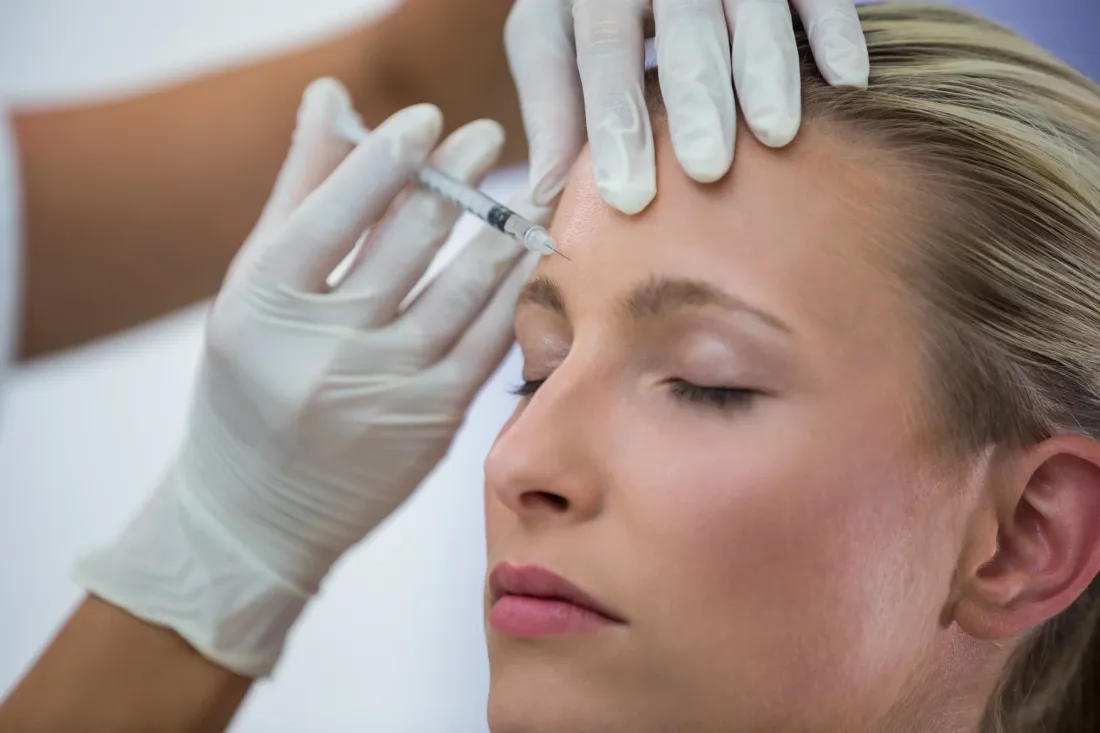
The vertical lines between the eyebrows, the ”11s”, are one of the most common reasons people first ask about Botox. They tend to bother people not because of how they look in the mirror, but because of what other people read into them: tired, stern, unimpressed, worried. Here’s an honest look at what treating them involves.
What actually causes frown lines
Between your brows sits a small group of muscles, the corrugators, which pull the brows inward, and the procerus, which pulls the area between them downward. Every time you frown, squint, concentrate, or react to bright light, they contract and the skin above them folds.
Do that a few thousand times a year for a couple of decades and the fold stops fully releasing. What started as a line that appeared only when you frowned becomes a crease that’s faintly there when your face is at rest.
A few things speed that up:
- Squinting, from screens, driving, or an out-of-date glasses prescription
- Sun exposure over years, which reduces the skin’s ability to spring back
- Genetics and natural muscle strength, some people have a notably strong corrugator and see lines in their late twenties
- Skin thickness and texture, which affect how deeply a fold sets in
Because these lines are driven by movement, they’re the kind of line neurotoxin is designed for. Volume loss lines and sun-damage lines are a different problem with a different answer, our guide to Botox vs fillers covers where that line sits.
How Botox helps
Botox (or Dysport, see how the two compare) temporarily relaxes those muscles between the brows. With the pulling reduced, the skin above stops being folded so forcefully, and the ”11s” soften. The face still moves; the frown just loses some of its force.
It’s the same conservative, anatomy-first approach used across our Botox and neurotoxin treatments.
What it can and can’t do
| Concern | Can Botox for the 11s help? |
|---|---|
| Lines that appear when you frown | Yes, this is the core use |
| Faint lines visible at rest | Often softened, though rarely erased in one round |
| Deep, long-established creases etched into the skin | Partially, softened, not removed; see below |
| Looking stern or angry at rest | Often, since much of that read comes from the frown |
| Horizontal forehead lines | No, that’s a separate muscle and a separate area |
| Crow’s feet at the outer eye | No, treated separately, see crow’s feet |
| Hollowing or lost volume in the upper face | No, that’s a filler question |
| Loose or crepey skin texture | No, neurotoxin relaxes muscle, it doesn’t tighten skin |
The row worth pausing on is the deep, established crease. Once a line is etched into the skin itself, relaxing the muscle stops it being reinforced and allows it to soften over time, but it may not disappear, and it may take more than one treatment cycle before you see the fuller change. Anyone promising a deep static line will vanish in two weeks is overselling it. Crystal will tell you at consultation which of your lines are dynamic and which are set in, because that changes what’s realistic.
Who it tends to suit
- Anyone bothered by vertical lines between the brows
- People who are told they look tired or annoyed when they aren’t
- Those wanting to soften lines while they’re still movement-driven, before they set in, the thinking behind preventative “baby Botox”
- First-timers who want a conservative result and still want to look like themselves
- Men who want the frown softened without losing a strong brow, see Botox for men
Who it may not be right for
There are times Crystal will recommend waiting, or a different plan:
- You’re pregnant or breastfeeding. Neurotoxin isn’t offered in either case.
- There’s an active infection or skin condition in the treatment area.
- You have certain neuromuscular conditions, or a known sensitivity to a previous neurotoxin treatment. This needs to be discussed before anything is booked.
- You have an event in the next two to three weeks. Results aren’t immediate, and a small bruise is possible. Timing matters, our wedding prep treatment timeline explains how far ahead to plan.
- Your main concern is heavy or hooded upper eyelid skin. Relaxing the frown muscles doesn’t lift heavy skin, and treating the area without accounting for how you compensate with your forehead can make heaviness more noticeable. This is a consultation conversation, and sometimes the honest answer is that injectables aren’t the right tool.
- You want the area completely immobilised. That isn’t the approach here. The goal is a softened frown that still moves.
How units work
Neurotoxin is dosed in units, not syringes, and the glabellar area typically takes more units than people expect, it’s one of the stronger muscle groups in the face. There’s no single correct number: it depends on how strong your corrugators are, how the muscles are recruited when you frown, whether you’ve been treated before, and what result you’re after.
A conservative first treatment, reassessed at the two-week mark, is usually the better path than a heavy first dose. If a touch-up is needed, it’s a small adjustment. Going the other way isn’t possible, you wait it out.
For how unit-based pricing works in practice, see our Botox cost guide for Brampton.
Treating the 11s on their own, or with the forehead
The frown area is often treated alongside the forehead, and there’s a clinical reason for it rather than an upselling one. The forehead muscle lifts the brows; the frown muscles pull them down. Treat one in isolation and the balance between them shifts, which for some people reads as a heavier brow or an uneven look.
That doesn’t mean everyone needs both areas. It means the assessment has to look at how your whole upper face moves together, not just at the lines you pointed to. Crystal will show you what she’s seeing and explain the trade-off either way. Some people also find that once the 11s are softened, they notice bunny lines along the nose that were previously masked by the frown.
What to expect
- Consultation, Crystal reviews your medical history and assesses your frown both at rest and in motion. She’ll ask you to frown, raise your brows, and relax so she can see how the muscles actually work.
- Treatment, a few small injections between the brows. It takes around 10 minutes. Most people describe a brief pinch; does Botox hurt breaks down comfort area by area if you’re anxious about it.
- The first 24 hours, minimal downtime, but follow the simple aftercare instructions: stay upright for a few hours, skip strenuous exercise, and don’t rub the area.
- Days 3 to 5, the first softening usually becomes noticeable.
- Around two weeks, full effect. This is the point to judge the result, and the point for a review if anything needs adjusting.
- Three to four months, the effect gradually wears off and movement returns. How long Botox lasts covers what influences that range.
Many people find that with repeated treatment over time, the habit of frowning weakens and the line at rest softens further. That’s gradual, and it varies person to person.
Who performs it
Every neurotoxin treatment at our practice is performed personally by Crystal Simm, RPN (Registered Practical Nurse). The glabellar area sits close to important anatomy, which is a good reason to be treated by someone clinically trained to assess it and to manage a complication if one arises.
If this would be your first appointment with us, what to expect at a first med spa visit walks through the consultation and the questions worth asking.
Considering it?
Book a free consultation with Crystal Simm, RPN, in Brampton, or call (289) 272-3379. She’ll look at how your frown actually moves, tell you what’s realistic for your lines, and be straightforward if something else would serve you better.
Considering botox & neurotoxin in Brampton?
Crystal offers a free consultation to talk through your goals and whether this treatment is right for you.
Prefer to talk? Call or text (289) 272-3379.