
Botox for Crow's Feet: What to Expect
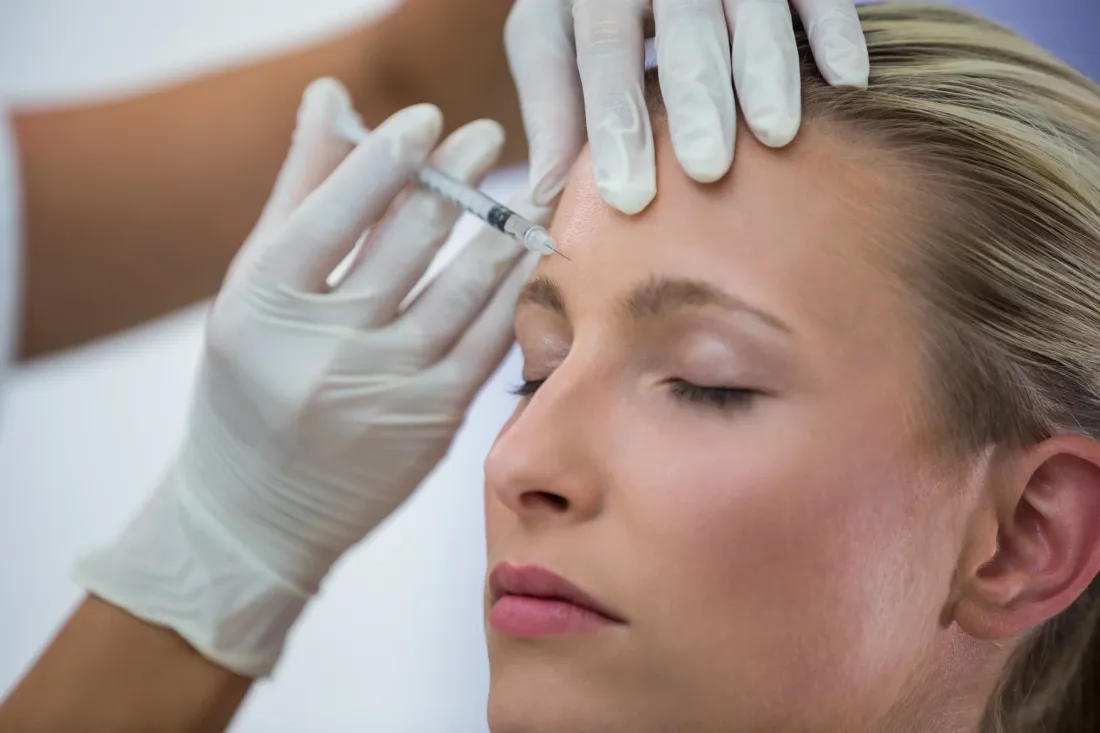
Crow’s feet, the fine lines that fan out from the outer corners of your eyes when you smile, are one of the most common reasons people try Botox. They’re also one of the areas where the difference between a good result and a strange one comes down to restraint. Here’s an honest look at what treating them involves.
What causes crow’s feet
Around each eye sits a ring-shaped muscle, the orbicularis oculi. Its outer edge contracts every time you smile, laugh, squint into the sun, or read a screen that’s slightly too far away. Each contraction bunches the thin skin at the corner of the eye into little radiating folds.
For years those folds release as soon as your face relaxes. Over time, and with thousands of smiles, they start to linger. What was a line that appeared only when you laughed becomes a line that’s faintly there at rest.
A few things speed that up:
- Squinting, from bright light, screens, or an out-of-date glasses prescription
- Sun exposure over years, which thins the skin and reduces its spring
- Thin skin around the eye, which is naturally thinner here than almost anywhere else on the face
- Genetics and how you smile, some people smile with their whole eye area and see these lines early
Because crow’s feet are driven mostly by movement, they’re the kind of line neurotoxin is designed for. That’s also the reason it can’t fix everything around the eyes, which is where the table below comes in.
How Botox helps
Botox (or Dysport, see how the two compare) temporarily relaxes the outer portion of that eye muscle. With the pull reduced, the skin at the corner of the eye folds less forcefully and the lines soften. You still smile. The eyes still crinkle a little. The lines just lose some of their depth and spread.
It’s the same conservative, anatomy-first approach used across our Botox and neurotoxin treatments.
What it can and can’t do
| Concern | Can crow’s-feet Botox help? |
|---|---|
| Lines at the outer eye that appear when you smile | Yes, this is the core use |
| Faint lines visible at rest | Often softened, though rarely erased in one round |
| Deep, long-established creases | Partially, softened over time, not removed |
| Lines lower on the cheek that appear when you smile broadly | Limited, much of that fold comes from the cheek lifting, not the eye muscle |
| Crepey or fine texture on the under-eye skin | No, neurotoxin relaxes muscle, it doesn’t change skin quality |
| Hollows or dark circles under the eyes | No, that’s a volume or skin question, see below |
| Puffy under-eye bags | No, and they’re not a filler-only fix either, see fillers for under-eye bags |
| Lines between the brows or across the forehead | No, those are separate muscles and separate areas |
Two rows are worth pausing on. The first is the cheek. When you smile broadly, your cheeks rise and push skin up toward the eye. Part of what people call crow’s feet is that push, not the eye muscle, and relaxing the eye muscle can’t stop your cheeks from lifting. Crystal will show you which part of your lines is which.
The second is the under-eye area. People often point to the whole region around the eye, but the outer-corner lines, the under-eye hollow, and the crepey lower-lid skin are three different problems. Hollows are an under-eye filler conversation. Thin, crepey skin is sometimes a PRP under-eye conversation. And sometimes the honest answer is that injectables aren’t the right tool at all.
Restraint matters more here than almost anywhere
The eye area is expressive. It’s where people read warmth in a smile. That’s the reason over-treating crow’s feet tends to look wrong in a way that’s hard to name: the mouth smiles but the eyes don’t quite join in.
Crystal treats this area with a few principles in mind:
- Soften, don’t erase. A little crinkle when you laugh is part of a natural smile. The aim is fewer and shallower lines, not a smooth band at the corner of the eye.
- Stay at the outer edge. Placement stays well away from the eye itself and the muscles that lift the upper lip and cheek.
- Look at the whole upper face. Treating crow’s feet, frown lines, and the forehead changes how those areas balance. Some people notice bunny lines on the nose once neighbouring muscles are relaxed. Assessing how everything moves together avoids chasing one line at a time.
- Start light and review. A conservative first treatment, reassessed at two weeks, is the better path. Adding a little more is easy. Taking it away isn’t possible, you wait for it to wear off.
Who it tends to suit
- Anyone bothered by fine lines at the outer corners of the eyes
- People who look more tired than they feel
- Those wanting to soften lines while they’re still movement-driven, the thinking behind preventative “baby Botox”
- First-timers who want a subtle result and still want to look like themselves
- Men who want the lines softened without a smoothed-over look, see Botox for men
- People already treating their frown lines who want the upper face to look balanced
Who it may not be right for
There are times Crystal will recommend waiting, or a different plan:
- You’re pregnant or breastfeeding. Neurotoxin isn’t offered in either case.
- There’s an active infection or skin condition around the eyes. Treatment is rescheduled until it settles.
- You have certain neuromuscular conditions, or a known sensitivity to a previous neurotoxin treatment. This needs to be discussed before anything is booked.
- You have an event in the next two to three weeks. Results take time to appear, and the thin skin around the eyes bruises more easily than other areas. Our wedding prep treatment timeline explains how far ahead to plan.
- You’re on blood thinners. Bruising is more likely. Never stop a prescribed medication for a cosmetic treatment; mention it at consultation.
- Your main concern is hollows, bags, or loose lower-lid skin. Relaxing the eye muscle won’t change those, and treating the lines won’t meet the expectation.
- You want the area completely still. That isn’t the approach here.
How units work
Neurotoxin is dosed in units, not by syringe, and crow’s feet are treated on both sides, so the total is split between them. There’s no single correct number. It depends on how strongly your eye muscle contracts, how far the lines fan out, whether you’ve been treated before, and how soft you want the result to be. Sides often aren’t identical, since most people smile a little asymmetrically.
For how unit-based pricing works in practice, see our Botox cost guide for Brampton.
What to expect
- Consultation, Crystal reviews your medical history and watches the area at rest, in a full smile, and in a squint, so she can see which lines come from the eye muscle and which come from the cheek.
- Treatment, a few small, shallow injections at the outer corner of each eye. It takes around 10 minutes. Most people describe a brief pinch; does Botox hurt breaks down comfort area by area.
- The first 24 hours, minimal downtime. Follow the simple aftercare instructions: stay upright for a few hours, skip strenuous exercise, and don’t rub or press on the area.
- Days 3 to 5, the first softening usually becomes noticeable.
- Around two weeks, full effect. This is the point to judge the result, and the point for a review if anything needs adjusting.
- Three to four months, the effect gradually wears off and movement returns. How long Botox lasts covers what influences that range.
Recovery timeline
| When | What’s typical |
|---|---|
| Same day | Small bumps at the injection points that settle within the hour; possible pinpoint redness |
| First few days | A small bruise is possible, the skin here is thin; makeup can usually cover it after 24 hours |
| Days 3 to 5 | Lines begin to soften, sometimes one side slightly before the other |
| Around two weeks | Full effect; time for a review if needed |
| Three to four months | Gradual return of movement |
These are typical ranges, not promises. Uncommon effects around the eye, such as a smile that feels slightly different or changes in how the eye area feels, are usually temporary, but contact the practice if anything seems off, if bruising is spreading, or if you have any change in vision.
Botox or filler for the eye area?
It’s a common question, and the answer depends on what’s causing the concern. Lines that appear when you smile are a movement problem, which is Botox territory. Hollowing and lost volume under the eye are a structure problem, which is filler territory, and not everyone is a candidate for that. Our guide to Botox vs fillers goes through how to tell the difference.
Who performs it
Every neurotoxin treatment at our practice is performed personally by Crystal Simm, RPN (Registered Practical Nurse). The eye area is delicate, which is a good reason to be treated by someone clinically trained to assess it and to manage a complication if one arises.
If this would be your first appointment with us, what to expect at a first med spa visit walks through the consultation and the questions worth asking.
Considering it?
Book a free consultation with Crystal Simm, RPN, in Brampton, or call (289) 272-3379. She’ll watch how your eyes move when you smile, tell you what’s realistic for your lines, and be straightforward if something else would serve you better.
Considering botox & neurotoxin in Brampton?
Crystal offers a free consultation to talk through your goals and whether this treatment is right for you.
Prefer to talk? Call or text (289) 272-3379.