
PRP vs Hair Transplant: Which Is Right for You?
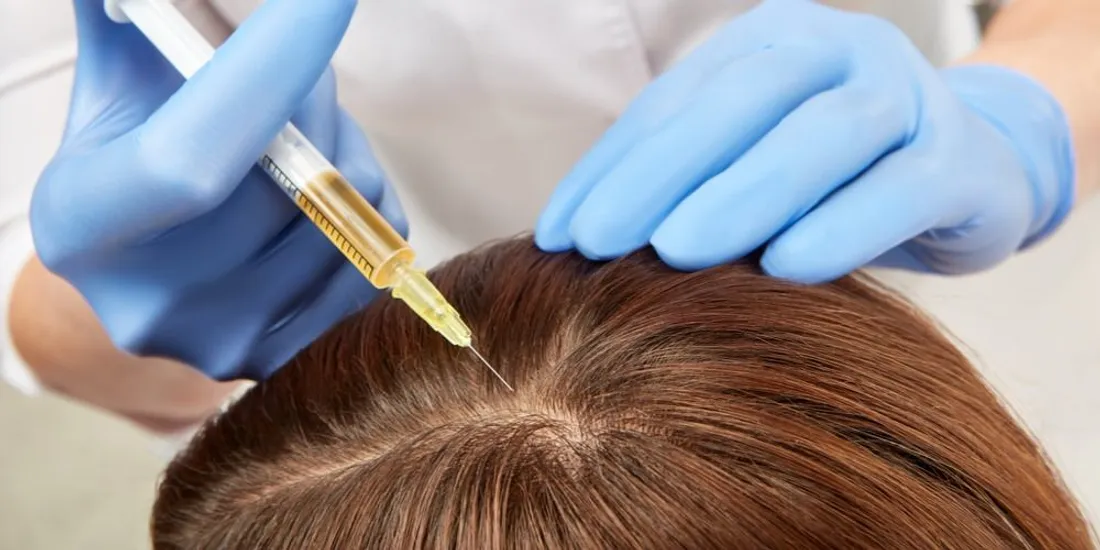
If you’re researching hair loss options, you’ve probably run into both PRP and hair transplants, often presented as if you have to pick one. They’re very different treatments that solve different problems. Once you see what each one actually does, the choice usually gets a lot simpler.
One thing to know up front: we offer PRP at Chrysalis Beauté, and we don’t perform hair transplants. A transplant is surgery, done by a physician at a surgical clinic. This comparison is here to help you work out which conversation to have first.
The short answer
- PRP supports the hair you still have. It suits early or moderate thinning, where follicles are weakened but still active.
- A hair transplant moves hair to where it’s gone. It suits more advanced loss, where follicles in an area are no longer active and there’s nothing left to support.
So the real question isn’t “which is better”. It’s “are my follicles still active in the area that bothers me?” That’s what an in-person assessment answers.
How each one works
PRP (platelet-rich plasma) is non-surgical. A small sample of your blood is drawn and spun in a centrifuge to concentrate the platelets, which are then carefully reintroduced into the thinning areas of the scalp. The aim is to support your follicles’ natural processes so existing hair looks thicker and healthier over time. It doesn’t create new follicles. More detail is in PRP for hair and skin.
A hair transplant is a surgical procedure. A surgeon takes follicles from a donor area, usually the back or sides of the scalp, and places them into the thinning or bald area. It relocates hair you already have rather than adding to the total, which is why the amount of donor hair available matters so much.
PRP vs hair transplant at a glance
| PRP | Hair transplant | |
|---|---|---|
| Type | Non-surgical injections | Surgery |
| What it does | Supports existing, active follicles | Relocates follicles to a new area |
| Aimed at | Early or moderate thinning | More advanced or long-established loss |
| Who performs it | At our practice, Crystal Simm, RPN | A physician at a surgical clinic |
| Appointment | About 45 to 60 minutes per session | Typically a long procedure day |
| Downtime | Minimal | Surgical recovery |
| How results arrive | Gradually, over several months | Gradually, often over many months |
| Commitment | 5-session program, then optional top-ups | A procedure, sometimes more than one |
| Cost | From $499 per session; the program is quoted as a package | Considerably higher up front; quoted by the surgical clinic |
Neither one is instant. That surprises people about transplants, but moved follicles take time to settle and grow, so patience is part of both routes.
What each one can and can’t do
| PRP | Hair transplant | |
|---|---|---|
| Thicken hair that’s thinning | This is what it’s aimed at | Not its main purpose |
| Put hair back in a long-bald area | No; inactive follicles usually don’t respond | This is what it’s designed for |
| Slow ongoing thinning elsewhere | It supports existing follicles, with no guarantee | No; untreated areas can keep thinning |
| Avoid surgery and scarring | Yes | No |
| Work without maintenance | No; top-ups are common every 6 to 12 months | Transplanted hair tends to last, but the hair around it may still need looking after |
The last two rows are the ones people miss. PRP isn’t a one-time fix, and a transplant doesn’t stop the underlying hair loss. Both are honest reasons the two are sometimes used together.
Cost and commitment, honestly
PRP at Chrysalis Beauté starts from $499 per session. Hair restoration is offered as a 5-session program, quoted as a package at your consultation, and many people keep their results with a top-up every 6 to 12 months. So PRP is a lower cost to start, with an ongoing cost if you choose to maintain it. The full breakdown is in PRP hair restoration cost and sessions.
A transplant is a larger single outlay, and pricing depends on how much hair is being moved. We don’t quote for surgery we don’t perform, so get that figure directly from a surgical clinic.
Over several years the two can end up closer than they first look, which is why cost alone is a poor way to decide. Suitability comes first: the cheaper option is poor value if it’s the wrong tool for your stage of hair loss.
Which should you look at first?
PRP is usually the sensible first conversation if:
- Your hair is thinning rather than gone, with a wider part, less density, or a see-through crown
- The change is fairly recent
- You’d prefer to avoid surgery, or aren’t ready for it
- You’re comfortable with a program and gradual results
A surgical opinion makes more sense if:
- You have areas that have been smooth and bald for a long time
- Your hairline has receded well back and you want it restored
- You’ve completed a proper course of non-surgical treatment and haven’t seen the change you hoped for
See your doctor first if:
- Your hair loss was sudden or patchy, or came with other symptoms. Underlying medical causes should be checked before any cosmetic treatment.
- The shedding started a few months after having a baby. It often settles on its own within a year (postpartum hair loss).
Can you do both?
Sometimes, yes. They do different jobs, so they aren’t mutually exclusive:
- Before deciding on surgery. Some people try PRP first to see how their existing hair responds, then decide whether surgery is still something they want.
- Alongside a transplant. Some people use PRP to support the non-transplanted hair around the treated area. Whether and when that’s appropriate is your surgeon’s call, so ask them before booking anything.
- With medication. Minoxidil and finasteride work through different mechanisms again and are worth discussing with your doctor (PRP vs minoxidil).
If you’re already working with a surgeon or taking a prescribed medication, tell Crystal at your consultation so the plan fits around it.
Honest expectations
- PRP isn’t a guaranteed regrowth treatment. It supports follicles that are still active, and individual results vary. Our article on whether PRP works for hair loss covers this in more depth.
- PRP won’t replace a transplant for long-established baldness. If that’s your situation, Crystal will say so rather than sell you a program.
- A transplant isn’t a cure for hair loss. It restores an area; it doesn’t change what’s happening to the hair around it.
- Earlier is easier. Every non-surgical option works better while follicles are still active.
Who PRP may not be right for
- Your loss is long-established baldness rather than thinning
- You’ve had sudden or patchy hair loss that hasn’t been checked by your doctor
- You’re pregnant or breastfeeding; elective treatments are generally postponed
- You have a blood or platelet disorder, or take medication that affects clotting (tell Crystal what you take, and never stop a prescribed medication for a cosmetic treatment)
- You want a fast or one-time result
Your full medical history is reviewed at consultation.
Common questions
Is PRP a replacement for a hair transplant? No. PRP supports existing follicles; a transplant relocates them. For early thinning PRP may be all you need. For advanced loss it isn’t a substitute for surgery.
Is PRP painful compared with surgery? PRP involves a blood draw and small injections into the scalp. Most people describe it as uncomfortable rather than painful, and there’s no surgical recovery. What to do afterward is covered in PRP aftercare.
How long before I’d know if PRP is working? Changes typically become visible over several months as the program progresses. Crystal reviews your progress at the end of the core program and gives you an honest read on whether maintenance is worthwhile.
Do you offer hair transplants? No. We offer PRP hair restoration. If your assessment suggests surgery is the better fit, Crystal will tell you and suggest speaking with a hair restoration surgeon or your doctor.
Who performs PRP at Chrysalis Beauté? Every treatment is performed personally by Crystal Simm, RPN, a Registered Practical Nurse with the College of Nurses of Ontario.
Not sure which side of the line you’re on?
A blog comparison can only take you so far. The answer depends on your stage of hair loss, and that takes a look at your scalp. Book a free consultation with Crystal in Brampton, or call / text (289) 272-3379. She’ll tell you honestly whether PRP hair restoration is likely to help, or whether a different route makes more sense. If it would be your first visit, what to expect at a first med spa visit walks through the consultation step by step.
Considering prp treatments in Brampton?
Crystal offers a free consultation to talk through your goals and whether this treatment is right for you.
Prefer to talk? Call or text (289) 272-3379.