
Russian Lips: The Russian Lip Filler Technique, Styles and Who It Suits
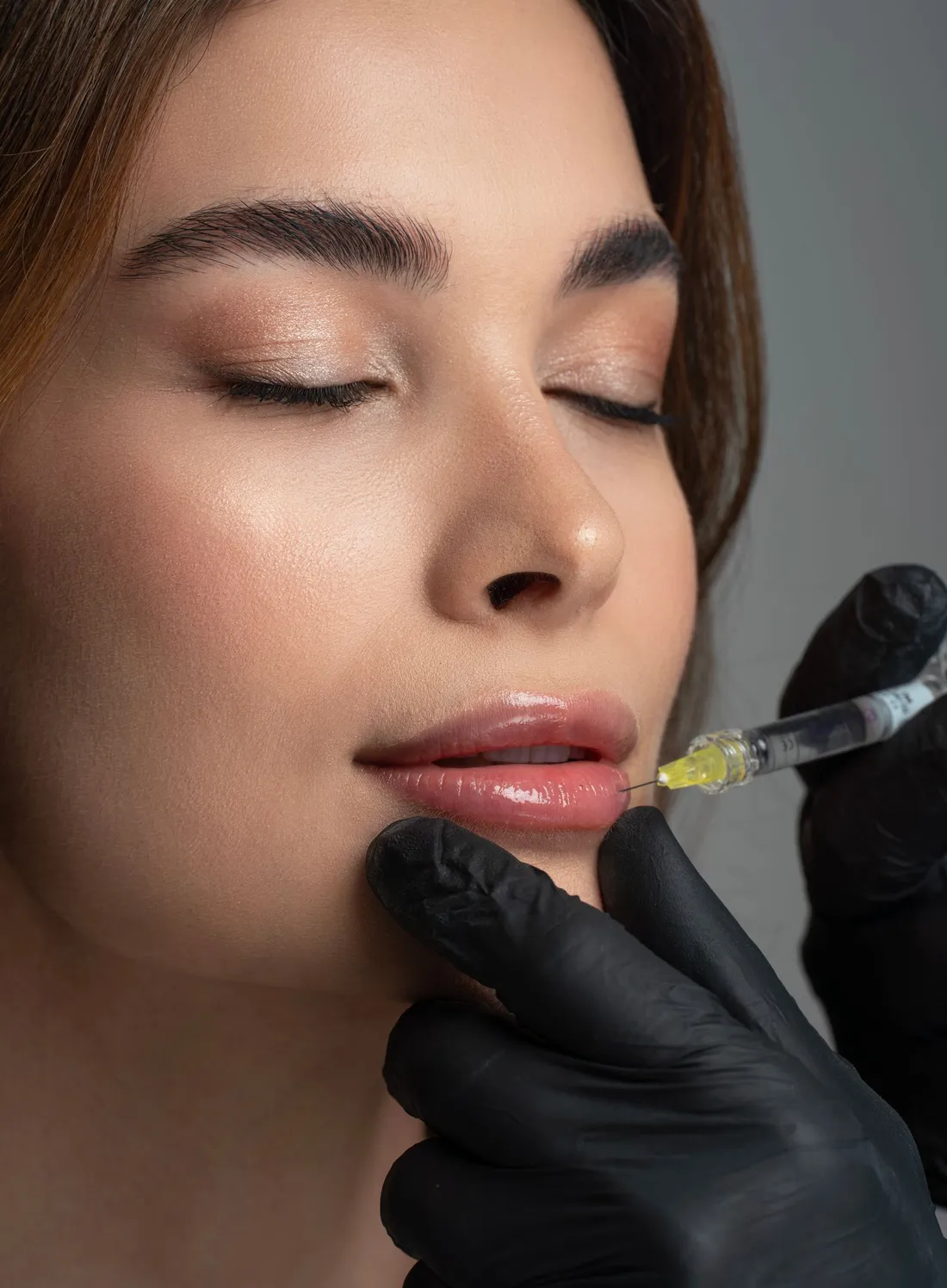
“Russian lips” is one of the lip requests we hear most often, usually from a reference photo saved off Instagram or TikTok. It’s a technique, not a different product or a different filler. This guide covers what Russian lips actually are, how the Russian lip filler technique is done, how it compares with a traditional lip treatment, what it costs, and who it does and doesn’t suit.
The short answer: what are Russian lips?
Russian lips are a lip filler style that aims for height and lift rather than forward volume. The same hyaluronic acid (HA) filler used in any lip treatment is placed in small vertical amounts, working from the inside of the lip up toward the border. The result people are after is a taller upper lip, a more defined cupid’s bow and a heart-shaped centre, with a flatter profile when seen from the side.
The name comes from the look being popularised by injectors in Russia and Eastern Europe. You may also see it called Russian style lip filler, Russian lip filler technique or simply “the Russian technique”. They all mean the same thing.
How the Russian lip filler technique works
A traditional lip treatment runs filler along the body of the lip, usually from the corners inward, which adds fullness and pushes the lip forward. The Russian technique changes the direction of placement.
- Numbing first. Numbing cream goes on before anything else, and most lip fillers also contain a local anaesthetic.
- Vertical placement. Instead of threading filler along the lip, Crystal places a series of small vertical deposits, entering from the inner part of the lip and depositing product toward the border. Each deposit lifts a small section of lip upward rather than outward.
- Many small amounts, not a few large ones. The product is spread across more injection points than a traditional treatment, which is what builds height across the whole lip rather than volume in one spot.
- Shaping the centre. Extra attention goes to the cupid’s bow and the central upper lip, where the lifted, heart-shaped look comes from.
Because there are more injection points and the placement is precise, a Russian lip appointment takes longer than a standard lip filler visit, which usually runs about 30 to 45 minutes. It also tends to swell more in the first few days, for the same reason.
Russian lip filler mapping: how the shape is planned
“Mapping” is the planning step that happens before any filler goes in. If you search for a Russian lip filler shape guide, you’ll find diagrams with lines drawn across the lips. Those lines show where each vertical deposit goes and where the height is meant to sit.
A diagram is a general pattern. Your own plan depends on your lips, so at the consultation Crystal looks at:
- Your cupid’s bow. How far apart the two peaks sit and how defined they already are.
- The balance between upper and lower lip. Adding height to one changes how the other reads.
- The lip border. Whether it’s crisp, or blurred by older filler.
- How much lip shows. Both at rest and when you smile or speak.
- Symmetry. Most lips are slightly uneven from side to side, and the plan accounts for that.
- Your profile. How the lips sit against the nose and chin from the side.
This is why two people who bring in the same reference photo can leave with different plans.
Russian lip filler vs traditional lip filler
| Traditional lip filler | Russian lip filler | |
|---|---|---|
| Main effect | Volume and projection | Height and lift |
| Side profile | Fuller, more forward | Flatter, softer |
| Placement | Along the lip body, from the side | Vertical, from inside outward toward the border |
| Injection points | Fewer | More |
| Appointment | About 30 to 45 minutes | Longer, because of the extra placement |
| Swelling | Typical, settling over two to three days | Often a little more, and for a day or two longer |
| Sessions | Often one, with a review | Often built over more than one visit |
| Product used | HA filler | The same HA filler |
Neither is “better”, they create different looks, and plenty of results sit somewhere between the two. If you’re still deciding on a direction, our guide to lip filler shapes walks through the common styles side by side, and what dermal fillers are covers how HA filler works in the first place.
What Russian lips look like from the side
From the front, Russian lips look taller. From the side, the lip stays close to where it started, because the upper lip rises more than it pushes forward. That flatter profile is the reason many people choose the technique, and it’s also the most common reason for disappointment. If the photo you saved is a side view of full, projected lips, you’re looking at a traditional result. Bring a front view and a side view of the look you want, so the plan matches both.
Different styles of Russian lip filler
“Russian lips” isn’t one fixed look. The vertical placement stays the same, and what changes is how much product is used and where it goes.
| Style | What it means | Who tends to ask for it |
|---|---|---|
| Classic Russian lips | Vertical placement across both lips, with clear height, a defined cupid’s bow and a flat profile | People who want the look in their reference photos |
| Mini Russian lips | The same placement with less product, often a half syringe, for a smaller lift and a cleaner border | First-timers and anyone who wants a smaller change |
| Russian and traditional mix | Vertical placement for height in the upper lip, with some traditional placement for body in the lower lip | People who want lift and some fullness from the side |
| Upper lip only | Vertical placement in the upper lip, with the lower lip left alone | People whose lower lip is already full |
Which style fits is decided at the consultation, and it can change once Crystal has seen how your lips move. Starting with the smaller version and building from there is always an option.
What the Russian technique can and can’t do
| What you want | Russian technique |
|---|---|
| A taller, lifted upper lip | Yes, this is its main purpose |
| A sharper cupid’s bow and heart-shaped centre | Yes |
| Lips that look fuller from the front | Yes, through height rather than projection |
| Obvious fullness from the side | No, a traditional placement does this better |
| A result in one quick appointment | Not usually, it takes longer and is often built over two visits |
| Fixing filler that has migrated above the lip line | No, that needs assessing and sometimes dissolving first |
| A permanent change | No, HA lip filler is temporary, commonly 6 to 12 months |
Who it tends to suit
- People who want lifted height and a defined cupid’s bow rather than forward projection
- Those whose upper lip currently shows very little when they smile or speak
- People whose lips roll inward or look thin from the front but who don’t want a projected profile
- Anyone who wants their lip shape approached deliberately rather than by a set formula
Who it may not be for
This is the part social media usually skips. The Russian technique may not be the right call if:
- You want obvious volume from the side. Lift is not the same as projection. A traditional build may get you closer to what you’re picturing.
- Your lips have had a lot of previous filler, or there’s existing product sitting outside the lip border. Building height on top of that can accentuate the problem rather than fix it (see filler migration).
- You have very little time before an event. Swelling with this technique can be more pronounced in the first 72 hours.
- You want the smallest possible change. If you mainly want a touch more upper lip on show, a lip flip, a small Botox treatment with no filler at all, may be enough.
- You have a history of cold sores, are pregnant or breastfeeding, or have an active infection near the treatment area. Crystal will go through your history at consultation and tell you honestly if it’s not the right time.
Russian lips vs a “Russian lip flip”
Two different treatments get mixed together under this name, so it helps to separate them.
| Lip flip | Russian lips | |
|---|---|---|
| Product | Botox, a neurotoxin | HA filler |
| What it changes | Relaxes the muscle so the upper lip rolls slightly outward | Adds height and shape to the lip itself |
| Adds volume | No | Yes, as height |
| How long it lasts | Commonly 6 to 10 weeks | Commonly 6 to 12 months |
| How it’s priced | By area and units | Per syringe, from $499 |
There is no Botox in Russian lips. When people say “Russian lip flip” or “Russian flip lips”, they usually mean the Russian filler technique, because the vertical placement turns the upper lip up and out in a way that looks like a flip. A lip flip on its own is a separate, smaller treatment.
Some people do have both. Whether that makes sense for your lips, and how to time the two, is something Crystal works out with you at the consultation.
How much product it takes and how many sessions
There’s no fixed number. Many people start with one syringe and reassess, which is how Crystal generally prefers to work. You can always add, while removing is a bigger decision (dissolving lip filler explains why).
Because the technique is detail-intensive and builds structure gradually, it’s common for the look people have in mind to take more than one session spaced several weeks apart, rather than one large appointment. A second visit is planned once the first has fully settled, so the shape is judged on the real result and not on swelling.
What Russian lip filler costs in Brampton
Russian lips are priced the same way as any other lip filler at our practice: per syringe, not per technique. Lip fillers in Brampton at Chrysalis Beauté start from $499 for a full syringe, and a half syringe is also an option. Your exact plan and price are confirmed at the consultation.
What does change the total is the plan. If the look you want takes two sessions, each one is quoted separately, and touch-ups are quoted on their own. Our lip filler cost guide for Brampton breaks down what drives the price and how to budget for a gradual build.
What to expect
- Consultation. Crystal talks through the look you want and whether this technique suits your lip anatomy, tooth show and facial proportions. Bring reference photos.
- Treatment. Numbing first, then a series of small vertical injections. It takes longer than a standard lip appointment.
- Recovery. Swelling and possible bruising for a few days, and expect lips to look larger than the final result at first. Things generally settle over one to two weeks (lip filler aftercare).
- Judging the result. Assess the shape at the two-week mark, not day three. A follow-up is included to review the result.
- Longevity. Similar to other lip filler, commonly 6 to 12 months, though this varies person to person (how long lip fillers last).
If this would be your first lip treatment of any kind, our first-time lip filler guide covers the basics before you book.
A note on who does it
The Russian technique involves more injection points and precise placement near the lip border, so it should be done by a clinically trained injector who can assess your anatomy and manage complications. Every treatment at our practice is performed personally by Crystal Simm, RPN (Registered Practical Nurse).
Common questions
What is the Russian technique for lip filler? It’s a way of placing lip filler vertically, in many small amounts from the inside of the lip toward the border. The aim is height and a defined cupid’s bow, with less forward projection than a traditional lip treatment.
What are mini Russian lips? The same vertical placement with less product, often a half syringe. The lift is smaller and it’s a common starting point for a first treatment.
Is there Botox in Russian lips? No. Russian lips are done with HA filler only. Botox is used for a lip flip, which is a different treatment.
Do you see patients from Vaughan for Russian lips? Yes. Our clinic is in Brampton at 57 Mill St N, Suite 106B, and many patients drive in from Vaughan and Woodbridge by Highway 7 or the 407. Our Vaughan page has directions.
Is Russian lip filler a different product? No. It’s the same hyaluronic acid filler used in a traditional lip treatment. The difference is entirely in how and where it’s placed.
Does the Russian technique hurt more? It involves more injection points, so some people find it a little more uncomfortable than a standard lip appointment. Numbing cream is applied first and most fillers contain a local anaesthetic. Most people describe pressure and brief pinches rather than pain.
Why do Russian lips swell more? More injection points means more small areas of trauma, and lips are already one of the areas that swells most readily. Expect the first 72 hours to be the most swollen, then a gradual settle over one to two weeks.
How long do Russian lips last? About the same as any lip filler, commonly 6 to 12 months. Lips move constantly, so filler breaks down faster there than in the cheeks or jawline.
Can Russian lips be dissolved? Yes. Because it’s HA filler, it can be dissolved with an enzyme if needed. Crystal will explain how that works at your consultation.
Can I get Russian lips if I already have lip filler? Sometimes. It depends on how much product is there and where it sits. If older filler has moved above the lip line, it may need dissolving before a lifted shape can be built cleanly. Crystal assesses this before anything is placed.
Russian lips or a lip flip? A lip flip uses a small amount of Botox to relax the upper lip so it rolls slightly outward. It adds no volume and no height. If you want a visible change in lip shape, that’s a filler question. If you only want the upper lip to show a touch more when you smile, the lip flip may be enough. Botox vs fillers covers the difference in more depth.
Curious if Russian lips suit your face?
Book a free consultation with Crystal Simm, RPN, in Brampton, or call (289) 272-3379. She’ll give you an honest read on whether the Russian lip filler technique fits your goals, or whether a different approach would get you there better.
Considering lip fillers in Brampton?
Crystal offers a free consultation to talk through your goals and whether this treatment is right for you.
Prefer to talk? Call or text (289) 272-3379.